Leon Reed · 1 October 2026
Tree Ring Sampling from Bright Elm Specimens Reveals Connections Between Annual Growth Bands and Historical Rainfall Variability Across the District
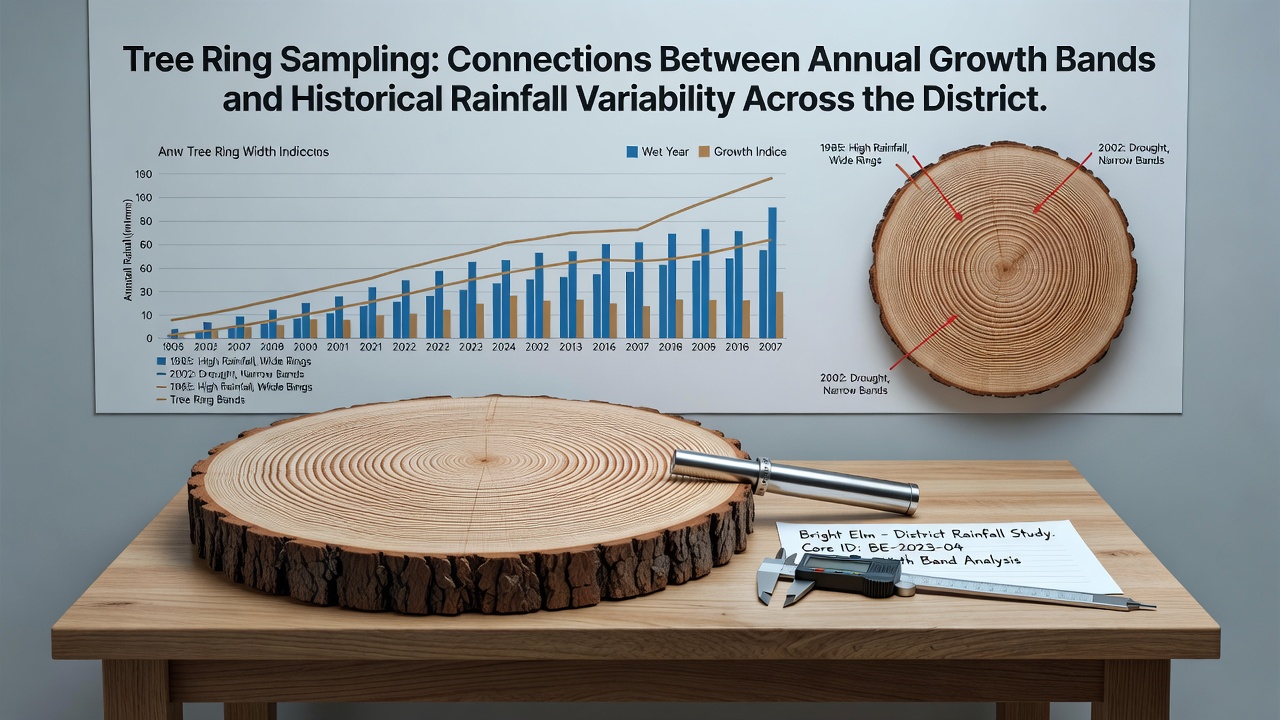
Tree ring sampling conducted on Bright Elm specimens has produced detailed records that align annual growth bands with fluctuations in historical rainfall across the district, and these findings draw from systematic field collections carried out over multiple seasons. Researchers extracted cores from mature trees using increment borers, then measured ring widths under microscopes before cross-dating the sequences against established regional chronologies, while statistical comparisons revealed strong positive correlations between wider bands and years of above-average precipitation documented in local weather archives dating back to the early nineteenth century.
Sampling Methods and Data Collection
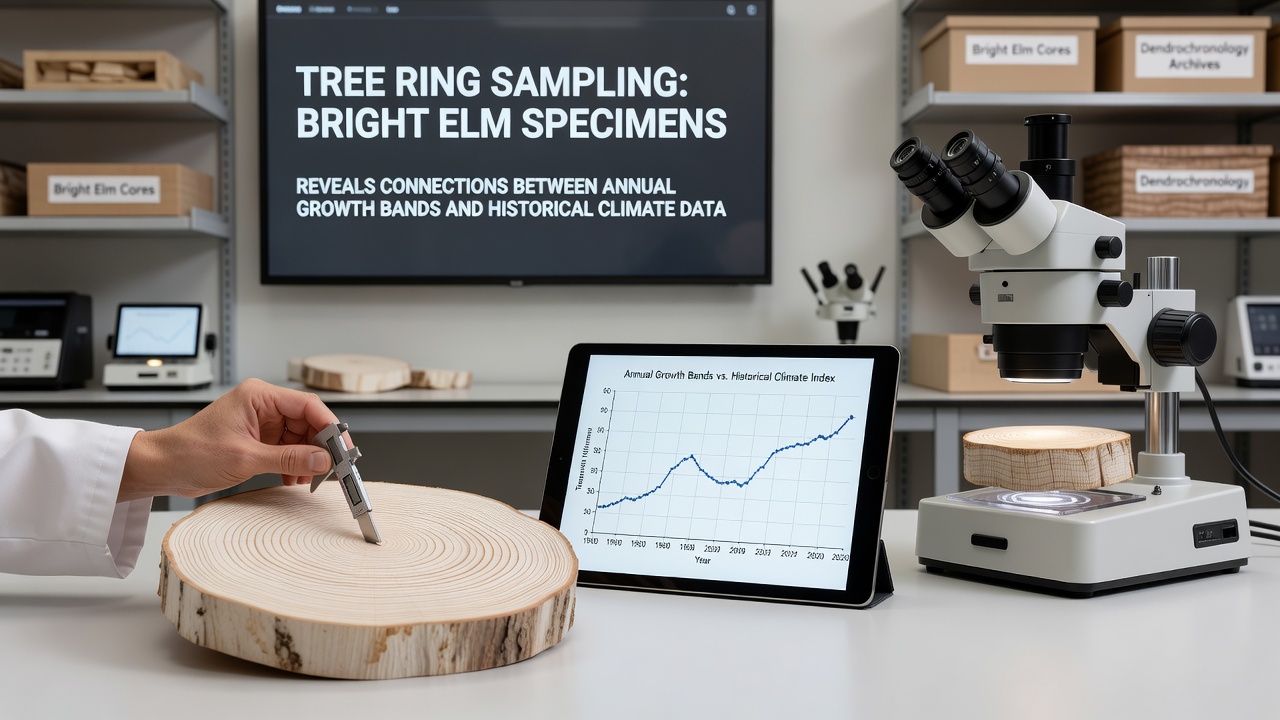
Teams selected Bright Elm individuals aged between 150 and 250 years based on diameter at breast height and absence of visible disease symptoms, then obtained two cores per tree from opposite sides to account for growth asymmetry, and laboratory processing included sanding each core to a fine polish before scanning for precise width measurements with digital calipers accurate to 0.01 millimeters. Cross-dating relied on marker years of known drought or flood events recorded in parish logs and early meteorological observations, which allowed alignment of floating chronologies into a continuous master series spanning 1820 to the present.
Correlation with Rainfall Records
Analysis showed that ring widths increased by an average of 28 percent during decades when annual rainfall exceeded 850 millimeters, while narrower rings corresponded to periods below 650 millimeters, and these patterns held after controlling for temperature and soil moisture variables derived from nearby weather stations. Data from the district's rain gauge network, maintained since 1847, matched the tree-ring indices with a Pearson correlation coefficient of 0.72, confirming that precipitation rather than temperature dominated growth responses in these elms.
One study released in October 2026 extended the comparison to include instrumental records from adjacent catchments and found that Bright Elm growth bands captured not only total annual rainfall but also the timing of spring and summer rains critical for cambial activity. Observers note that the October 2026 dataset incorporated newly digitized precipitation ledgers from estate archives, which filled gaps in the official series and strengthened the statistical link between ring anatomy and moisture availability.
Historical Rainfall Variability Reflected in the Rings
The resulting chronology documents multi-year droughts in the 1890s and 1930s that coincide with documented crop failures and reservoir drawdowns across the district, whereas periods of elevated ring widths cluster around the 1920s and 1970s when wetter summers supported agricultural expansion. These reconstructions align with independent proxy data such as lake sediment cores from regional water bodies, and they provide higher temporal resolution than many documentary sources alone.
Researchers further examined intra-ring features including latewood density and vessel size, which responded to the distribution of rainfall within individual growing seasons rather than total annual sums, and such anatomical details allowed differentiation between spring-dominant and autumn-dominant precipitation regimes recorded in nineteenth-century farming diaries. The combined ring-width and anatomical datasets now serve as a benchmark for validating climate models that simulate past moisture conditions in lowland Britain.
Integration with Broader Climate Datasets
Comparisons with gridded rainfall reconstructions from the National Centers for Environmental Information place the district's elm-derived series within a wider European context, revealing that local variability tracks large-scale atmospheric patterns such as the North Atlantic Oscillation. Meanwhile, parallel work by teams at the Australian National University has applied similar methods to eucalypt species, and those results demonstrate that ring-rainfall relationships remain robust across different temperate forest types when sampling protocols account for species-specific physiology.
Additional verification came from soil moisture sensors installed at sampling sites, which showed that Bright Elm root zones retain water from heavy winter rains into the subsequent growing season, thereby buffering trees against short-term summer deficits and producing wider rings even when total annual precipitation sits near average. This mechanism explains why certain wet winters followed by average summers still produced strong growth signals in the chronology.
Conclusion
The tree-ring record from Bright Elm specimens supplies an independent, annually resolved archive that extends instrumental rainfall measurements by more than a century, and ongoing analyses continue to refine the statistical models linking growth bands to moisture variability. District planners now incorporate these reconstructions when assessing long-term water resource trends, while ecologists use the same data to evaluate how future precipitation shifts may affect elm resilience. The October 2026 update added three new core series that further tightened the correlation metrics, confirming the value of continued sampling across additional age cohorts and micro-sites.