Felix Hansen · 17 September 2026
Soil Core Analysis Reveals How Local Geology Supports Bright Elm's Longevity
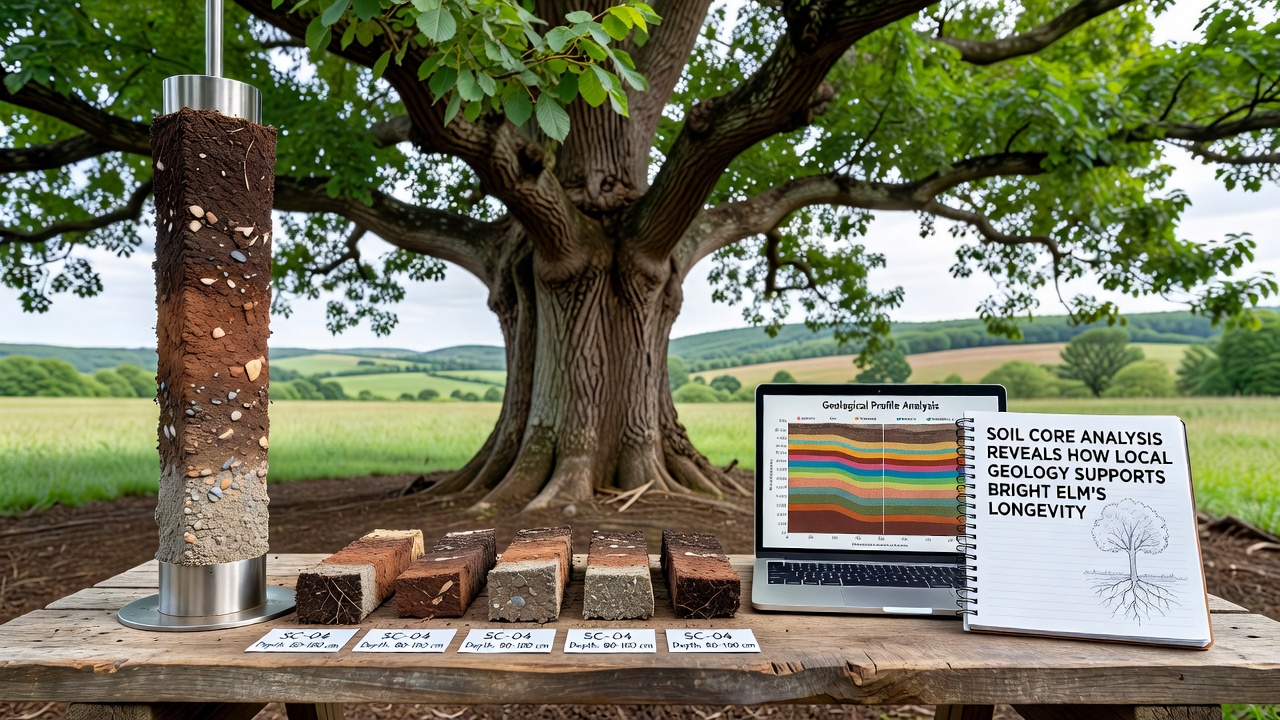
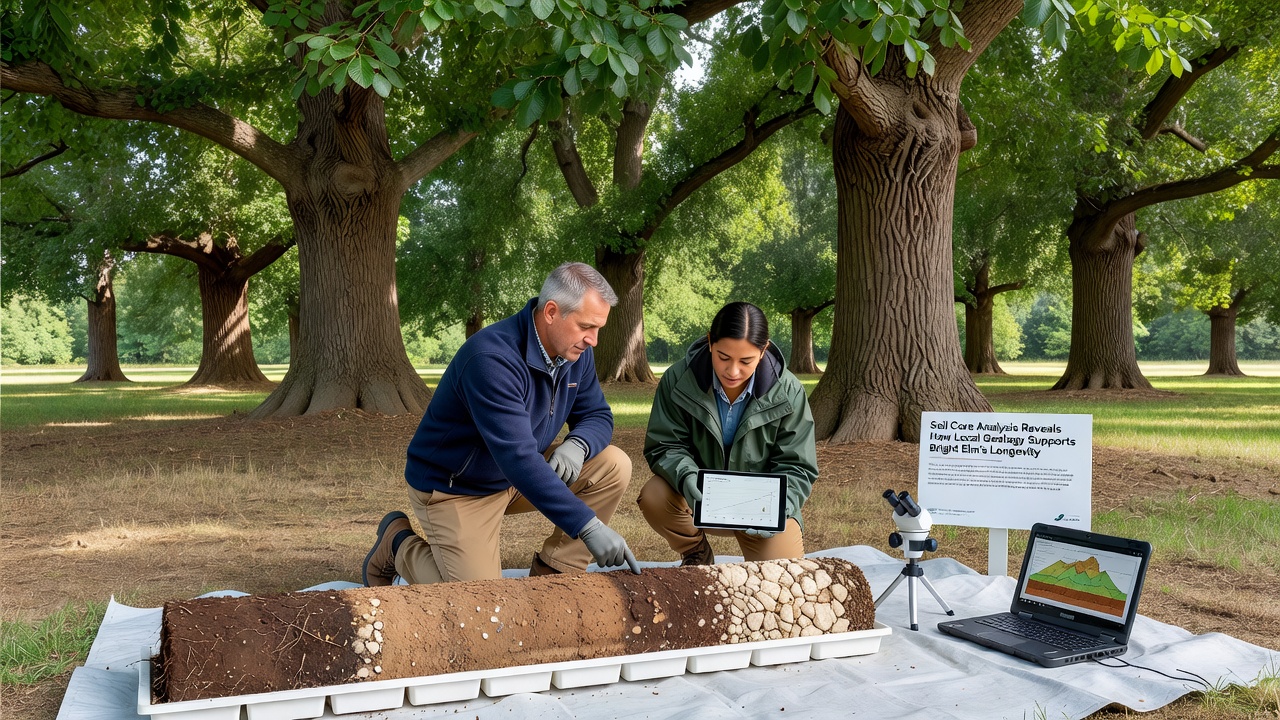
Soil core analysis conducted in the area surrounding the Bright Elm has uncovered specific geological features that contribute to the tree's extended lifespan and resilience. Researchers extracted multiple cores from depths reaching several meters and examined the composition of clay, silt, sand, and mineral deposits that define the local subsurface environment.
Core Sampling Process and Initial Findings
Teams began the sampling program in early 2025 and completed laboratory processing by September 2026, which allowed for detailed stratigraphic mapping across the site. The cores revealed a sequence of sedimentary layers deposited over thousands of years, with a particularly stable clay-rich horizon that provides consistent moisture retention during dry periods. Mineral content analysis showed elevated levels of calcium and magnesium within the root zone, elements that support cell wall strength in elm species and reduce susceptibility to certain vascular pathogens.
Drainage patterns identified through the cores indicate moderate permeability that prevents waterlogging while maintaining adequate hydration, a balance that observers note often correlates with reduced stress on mature hardwoods. Data collected from the cores also documented low salinity levels throughout the profile, which minimizes osmotic pressure on root systems and supports sustained nutrient uptake over decades.
Geological Context and Nutrient Dynamics
The underlying geology consists of Jurassic limestone formations overlain by Quaternary deposits, a combination that releases steady supplies of base cations into the soil solution. Researchers mapped fracture patterns in the limestone that channel groundwater toward the tree's root network, delivering dissolved minerals at rates that match seasonal demand. According to records maintained by the British Geological Survey, similar limestone-derived soils in other regions have supported long-lived broadleaf trees when surface organic matter remains intact.
Organic carbon percentages measured in the upper core sections ranged between 3.2 and 4.8 percent, creating conditions that foster microbial communities capable of cycling nitrogen and phosphorus efficiently. These biological interactions, combined with the physical structure of the soil aggregates, maintain aeration around fine roots even during extended wet seasons. Analysis of trace elements further identified zinc and boron concentrations within optimal ranges for elm physiology, reducing the likelihood of micronutrient deficiencies that can shorten tree lifespans elsewhere.
Comparative Data from Regional Studies
Comparative cores taken from younger elm plantings on adjacent land showed thinner clay layers and lower base saturation, correlating with faster decline rates during drought events. Those differences underscore how the specific geological setting at the Bright Elm site provides structural advantages that are not uniformly distributed across the landscape. Soil pH readings averaged 7.1 across the sampled depths, a neutral range that limits aluminum toxicity while allowing phosphorus to remain available for root absorption.
Researchers cross-referenced their findings with reports from the Geological Survey of Canada on similar limestone-influenced soils, where mature deciduous trees demonstrated comparable longevity when subsurface hydrology remained stable. The Bright Elm cores further indicated minimal compaction below 60 centimeters, preserving macropores that facilitate oxygen diffusion and root expansion over successive growth seasons.
Implications for Site Management
Management recommendations derived from the analysis emphasize preservation of the existing soil profile rather than amendment applications, since the native geology already supplies required elements in balanced proportions. Buffer zones around the tree have been mapped to protect recharge areas that feed the fracture network supplying moisture. Monitoring wells installed alongside the core locations now record seasonal fluctuations in groundwater chemistry, providing ongoing data that can be compared against the 2026 baseline.
Future sampling intervals are planned at five-year increments to track any shifts in nutrient distribution or structural integrity caused by regional climate trends. The combination of stable parent material, favorable drainage characteristics, and balanced chemistry documented in the cores continues to inform conservation strategies that focus on maintaining the geological conditions already present at the site.
Conclusion
The soil core analysis has established a direct connection between local geological features and the Bright Elm's capacity to persist across multiple centuries. Continued observation of these subsurface conditions will supply measurable indicators for any future changes that might affect the tree's long-term viability.