Leon Reed · 2 September 2026
Residents in Bright Elm have established a dedicated community group to address the rising threat of Dutch elm disease affecting local heritage trees. The initiative responds to recent reports of infected elms in public parks and private estates, prompting coordinated action to protect the area's historic landscape.
Group Formation and Objectives
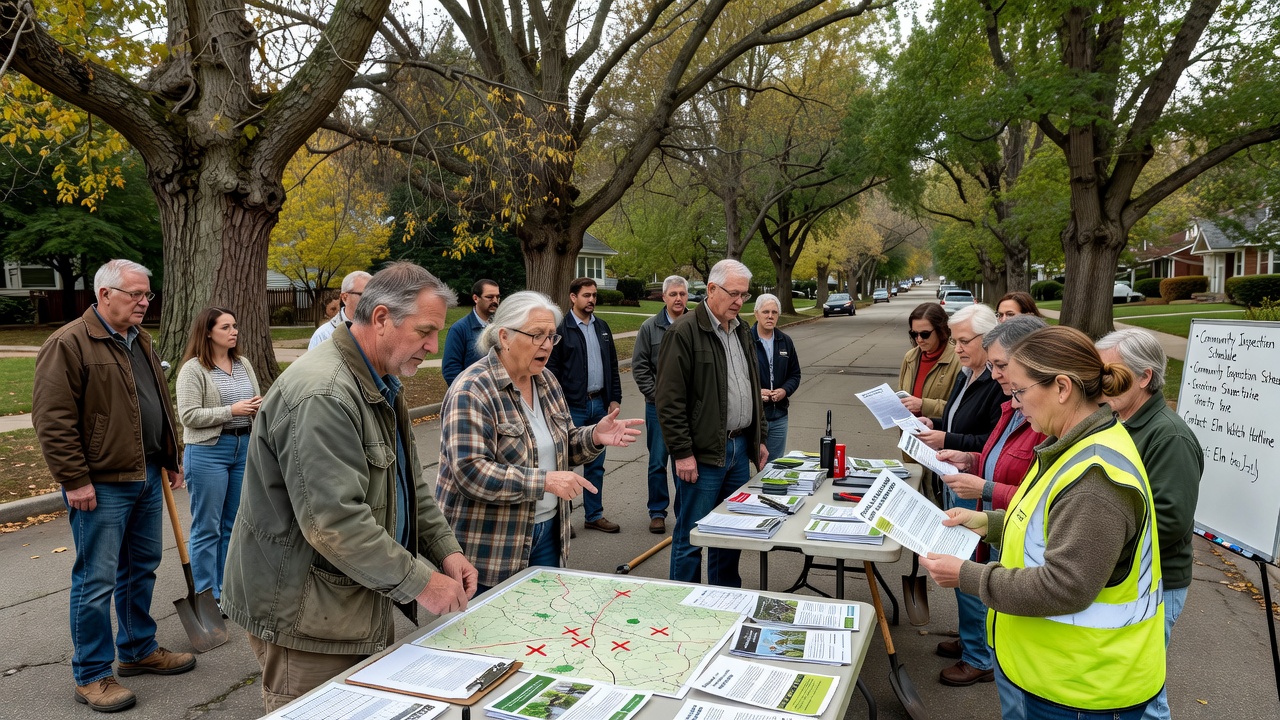
The Bright Elm Heritage Protection Group held its inaugural meeting last week, drawing over forty participants including arborists, landowners, and long-term residents. Members aim to monitor elm populations, share best practices for early detection, and advocate for municipal support in tree preservation efforts. The group plans regular surveys of high-risk zones and will maintain a central database of healthy and affected trees to track disease progression across the heritage site.
Local historian Margaret Ellison emphasized the cultural significance of the elms, noting their role in defining the character of Bright Elm for generations. The organization will collaborate with forestry experts to implement quarantine protocols and educate property owners on symptoms such as wilting leaves and bark discoloration. Funding for initial activities comes from private donations and a small grant from the regional heritage trust.
Prevention and Monitoring Strategies
Key measures include targeted removal of infected branches, application of approved fungicides where feasible, and restrictions on moving elm wood to prevent spore spread. Volunteers will receive training in identification techniques and safe disposal methods to minimize environmental impact. The group also encourages residents to report suspected cases through a dedicated hotline and online form.
Experts warn that without swift intervention, the disease could decimate up to sixty percent of remaining mature elms within five years. The protection group intends to plant disease-resistant elm varieties in strategic locations to maintain biodiversity and visual continuity. Partnerships with neighboring communities are under discussion to create a wider buffer zone against further outbreaks.
Monthly workshops will cover topics ranging from soil health improvement to legal protections for heritage trees. Officials from the local council have expressed support, pledging to review planning policies that might inadvertently accelerate disease transmission through construction activities. Continued vigilance remains essential to safeguard Bright Elm's distinctive natural heritage for future generations.